
A brand tracking study is one of the highest-leverage research investments a marketing team can make. Done well, it gives you a continuously updated read on how your brand is performing in the minds of your target market: who knows you, who considers you, and how you compare to competitors.
Done badly, it gives you a quarterly exercise in confirming that not much has changed.
The difference between these two outcomes is almost entirely in the setup. This guide walks through how to design and run a brand tracking study that produces data you can actually use.
What a Brand Tracking Study Measures
Brand health is not a single number. A well-designed tracking study measures a set of metrics across the purchase funnel:
Awareness Metrics
Unaided recall: the percentage of your target audience who name your brand unprompted when asked about the category. Top-of-mind awareness (first brand named) is the most valuable sub-metric here.
Aided recall: the percentage who recognise your brand when shown it. This is almost always significantly higher than unaided recall.
For a detailed guide to measuring awareness specifically, see How to Measure Brand Awareness.
Consideration and Preference
Consideration: “Would you consider buying from [Brand X] next time you purchase in this category?” This is the metric that connects awareness to purchase intent.
Preference: “If you were buying today, which brand would you choose?” First-choice preference is the metric that most closely correlates with market share.
Brand Associations
Brand associations measure what attributes consumers connect with your brand: “Which of the following words describe [Brand X]?” The list of attributes should reflect your brand’s intended positioning and your competitors’ positioning, so you can measure whether you own the attributes you are trying to own.
Net Promoter Score
Many brand tracking studies include NPS: “How likely are you to recommend [Brand X] to a friend or colleague?” NPS is a useful longitudinal metric because it is a single number that can be trended easily. It should be one metric among several, not the headline metric.
Defining Your Target Audience
The most important decision in a brand tracking study is defining exactly whose perceptions you are measuring. This sounds obvious. In practice, many tracking studies use a sample that is too broad.
A brand tracking study for a premium health food brand should sample health-conscious consumers in relevant income brackets, not all adults. A study for an enterprise SaaS brand should sample decision-makers at relevant company sizes, not all business professionals.
If your target audience is narrow, your sample needs to be drawn carefully. Panel providers can filter by demographics, but they cannot always filter by behaviour or category involvement. Build screening questions into your survey: “Have you purchased [category] in the last 12 months?” Use these to ensure you are sampling from the right population.
Setting Up the Survey
Core Question Set
A brand tracking survey should be short. Target completion time is 8-12 minutes. The core question set covers: unaided recall, aided recall and familiarity, consideration, preference, brand attribute ratings, and one or two custom questions relevant to your specific brand challenges.
Do not add questions because they are interesting. Add questions because you will act on the answers. Every additional question in a survey reduces completion rate and data quality for all questions.
Competitive Set
Include three to five competitors in your tracking study. Ask awareness, consideration, preference, and attribute questions for your brand and all competitors. This is what gives the data its diagnostic value.
Knowing that your consideration score is 28% is not useful. Knowing that it is 28% versus Competitor A’s 41% and Competitor B’s 22%, and that you closed the gap with A by 4 points this quarter, is very useful.
Question Order
Always ask for an unaided recall before aided recall. Always ask the overall NPS or satisfaction question before detailed component questions. Use a consistent order across all waves.
For detailed guidance on writing questions that do not bias results, see How to Write Survey Questions That Don’t Bias Responses.
Sample Design and Size
For a single-market brand tracking study, a minimum of 300 completed responses per wave is needed for stable top-level data. If you want to break down results by city, age, or gender, you need closer to 500-600 to have statistically reliable subgroups.
For multi-market studies, treat each market as an independent sample. Do not pool markets together unless you have a specific reason to compare pooled data.
Consistency of sample composition across waves is as important as sample size. If Wave 1 skews urban and Wave 2 skews semi-urban, your trend data is contaminated. Build demographic quotas into your sampling specifications and enforce them consistently.
Frequency and Timing
Quarterly tracking works for most brands. It gives you enough data points to see trends without over-investing in research.
Brands running major campaigns or product launches may want to add a wave immediately after a key marketing moment to capture the awareness or consideration impact. This produces a “pulse” design: quarterly baseline waves plus event-triggered pulse waves around significant marketing activity.
Avoid fieldwork periods that coincide with major holidays, festivals, or elections. These events change consumer mindsets and introduce temporal bias into your data.
Interpreting and Acting on Tracking Data
The goal of brand tracking is not to produce a report. It is to drive decisions.
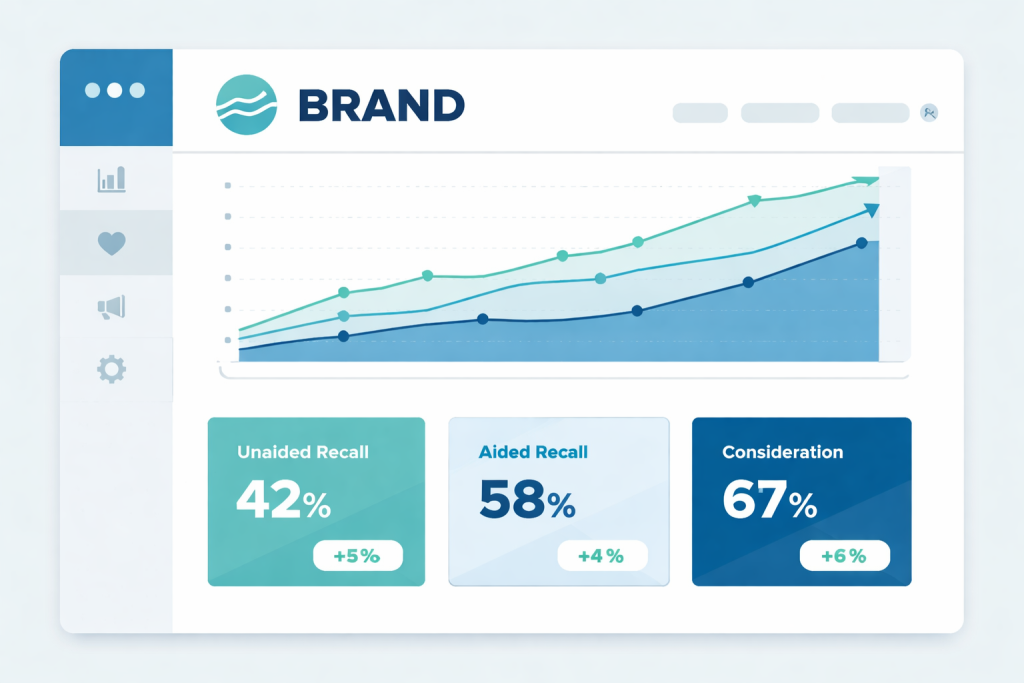
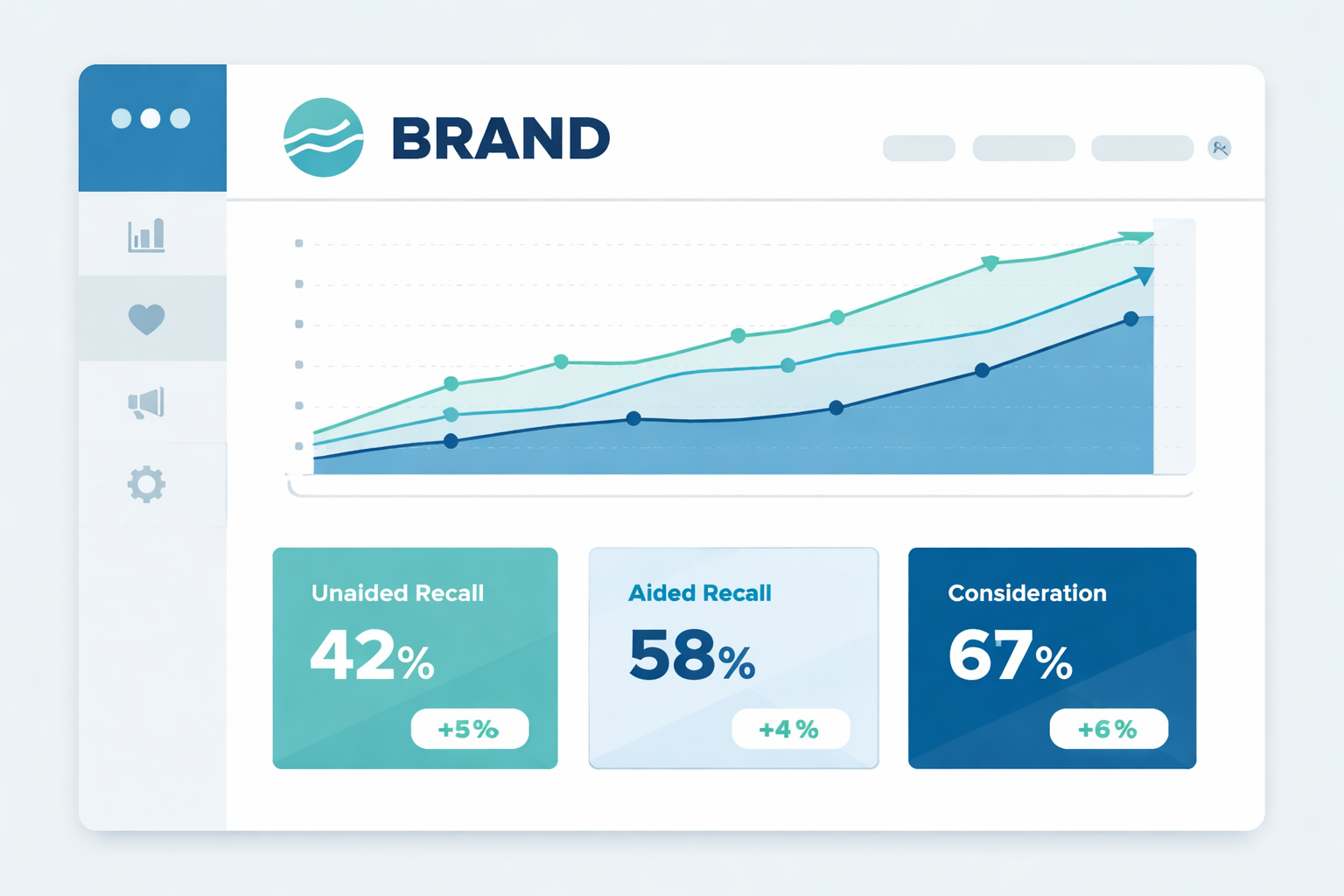
Build a simple brand health dashboard that shows three to five key metrics trended over time, with competitive comparison. Update it each wave. Distribute it to marketing leadership with a one-page commentary on what changed and what it means.
When you see a metric move significantly between waves, dig into it. A drop in consideration in a specific city or age group is a signal, not a finding. It requires follow-up: qualitative research to understand why, or a deeper quantitative cut of the existing data.
For guidance on how to present brand tracking data to marketing leadership in a way that drives action, see How to Present Research Findings to Stakeholders.
Running Brand Tracking Studies in India and Emerging Markets
Standard brand tracking methodology assumes a digitally active, web-survey-responsive population. This assumption fails in most Indian markets beyond Tier 1 cities, and across much of APAC and MENA.
Reaching a representative sample in India requires a methodology that works on mobile, in local languages, and through channels where respondents are already active. WhatsApp-native surveys achieve completion rates three to four times higher than web surveys in these markets. They also reach demographics that web panels systematically underrepresent: older consumers, lower-income consumers, and consumers in Tier 2 and Tier 3 cities.
For brands measuring brand health across India or broader APAC, this is not a minor methodological footnote. It is the difference between tracking data that represents your actual market and tracking data that represents the digitally active, English-literate portion of it.