
Brand awareness is one of the most cited metrics in marketing. It is also one of the most frequently measured incorrectly.
Most teams track brand awareness as a single number: the percentage of people who recognise their brand name when prompted. That number tells you almost nothing on its own. It does not tell you whether people think positively of you, whether they would consider buying from you, or whether your awareness is growing or declining relative to competitors.
This guide covers how to measure brand awareness properly: what to measure, how to design a tracking study, what questions to ask, and how to interpret results so they actually inform decisions.
What Brand Awareness Actually Means
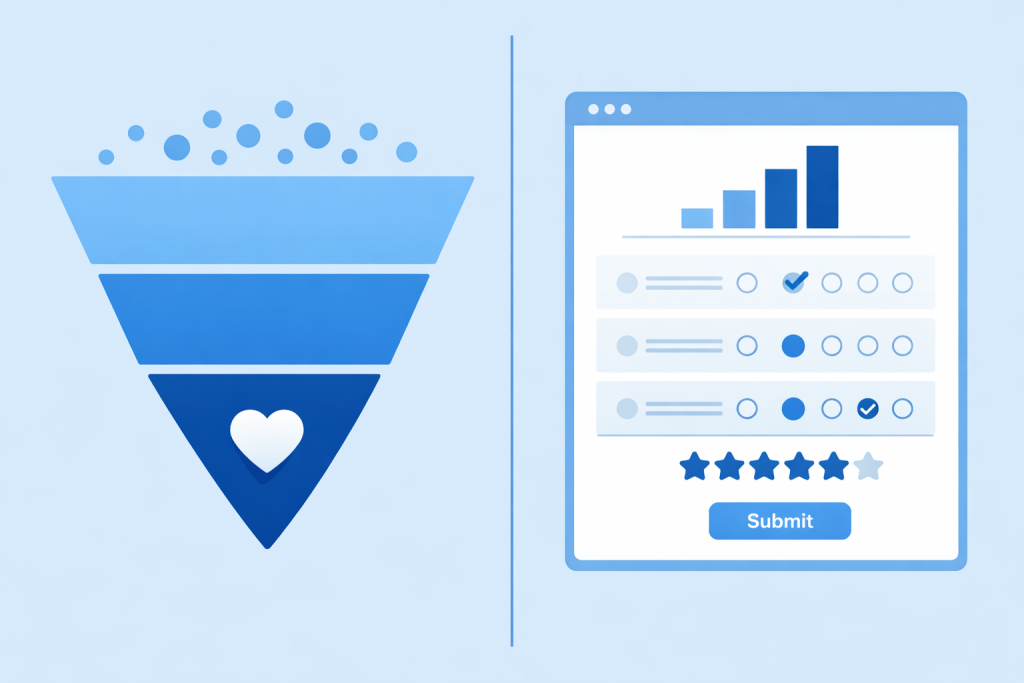
Brand awareness is not a single metric. It is a layer of related concepts that sit at the top of the purchase funnel. The three you need to understand are unaided recall, aided recall, and brand consideration.
Unaided Recall
Unaided recall measures whether someone can name your brand without being shown it. A typical question looks like: “When you think of mobile banking apps, which brands come to mind?”
The brands mentioned first are said to be “top of mind.” Brands mentioned at all are said to have unaided recall. Unaided recall is the gold standard of awareness: it means your brand exists in the consumer’s mental shortlist without being prompted.
Unaided recall is hard to build and easy to lose. It requires sustained marketing investment over time.
Aided Recall
Aided recall measures whether someone recognises your brand when shown it. The question format is: “Have you heard of [Brand X]? Yes / No / Not sure.”
Aided recall is always higher than unaided recall. A brand might have 80% aided recall and only 15% unaided recall. That gap tells you something important: most people have been exposed to the brand but it has not embedded itself as a mental shortlist option.
Brand Consideration
Consideration measures whether someone would actively think about buying from your brand in the future. It is the metric that connects awareness to revenue.
A brand with high awareness but low consideration has a perception problem, not an awareness problem. More advertising will not fix it. This distinction is critical and often missed.
The Four Questions Every Brand Awareness Study Should Include
A well-designed brand awareness survey covers four core areas in this sequence:
- Unaided category recall: “Which brands in [category] can you name?” — open-ended, not aided
- Brand familiarity: “How familiar are you with each of the following brands?” — rated on a scale for each brand in your competitive set
- Aided recall: “Have you heard of [Brand X]?” — asked for brands not yet mentioned
- Consideration: “How likely would you be to consider [Brand X] the next time you purchase in this category?” — scale of 1 to 5 or 1 to 7
This sequence matters. Asking aided recall before unaided recall contaminates the unaided data: you are prompting people with brand names they might not have recalled independently.
Designing a Brand Tracking Study
A one-off brand awareness measurement has limited value. What you need is a tracking study: a repeated survey conducted at regular intervals with a consistent methodology.
Frequency
For most brands, quarterly tracking is sufficient. Fast-moving consumer goods brands running heavy advertising campaigns may track monthly. Quarterly tracking gives you enough data points to identify trends without creating survey fatigue or excessive cost.
Sample Design
Define your target audience precisely before designing the study. A telecom brand measuring awareness among 18-35 urban mobile users in India will get very different results from a study that samples all adults. Define who you are measuring awareness among, because the number is meaningless without that context.
Sample sizes for brand tracking studies typically run between 300 and 600 per wave, depending on the number of subgroup analyses you need. If you want to break results down by city, age group, and income level simultaneously, your sample size needs to be larger.
Consistent Methodology
Change nothing between waves except the date. Use the same questions, same question order, same response scales, same demographic filters, and same channel. If you change any of these, you cannot attribute changes in results to real changes in the market — they might just be methodological artefacts.
For guidance on writing questions that do not introduce bias into your tracking data, see How to Write Survey Questions That Don’t Bias Responses.
How to Benchmark Your Results
Raw awareness numbers are not inherently good or bad. A 40% unaided recall score could mean you are the dominant brand in a fragmented category or a small player in a category with a single dominant competitor. Context is everything.
Competitive Benchmarking
Always include your key competitors in a brand awareness study. Ask the unaided recall question without prompts, then the aided recall question for all brands in the competitive set. This gives you a direct comparison: not just “40% of people recall our brand” but “40% of people recall our brand versus 62% for Competitor A and 28% for Competitor B.”
Category Average Benchmarking
Category averages for brand awareness vary significantly by sector. B2C fast-moving consumer goods categories typically have high aided recall across the board. Niche B2B categories can have leaders with only 20-25% unaided recall. Use industry benchmarks from your sector rather than cross-category comparisons.
Own Historical Benchmarking
The most actionable benchmark is your own historical data. Is awareness growing? Is consideration growing proportionally with awareness, or is there a gap opening up? Is one city or demographic segment lagging?
The Role of Qualitative Research in Brand Awareness
Survey data tells you what is happening to brand awareness. Qualitative research tells you why.
When your brand tracking study shows declining consideration despite stable awareness, a quantitative survey will not explain it. You need to talk to consumers. What are they hearing about your brand? What do they associate it with? What do competitors offer that you do not?
AI-moderated qualitative interviews can add this explanatory layer efficiently. Platforms like Merren run in-depth interviews through WhatsApp at scale, reaching respondents who would never complete a web survey. For brands measuring awareness across Tier 2 and Tier 3 cities in India, this accessibility gap matters enormously.
Measuring Brand Awareness Across India and APAC Markets
Standard brand awareness research methodology was largely developed for Western markets and English-speaking, digitally active consumers. Applying it directly to India, APAC, or MENA markets introduces several problems.
Response rates on email surveys are extremely low in these markets. Web-based survey panels often skew heavily urban and English-literate. Structured numerical scales behave differently across cultures — a “4 out of 5” in one market may reflect the same sentiment as a “3 out of 5” in another.
WhatsApp-native surveys, conducted in local languages, produce significantly higher response rates and more representative samples in these markets. A brand measuring awareness across Tier 1 and Tier 2 cities in India needs a methodology that can reach both.
For a detailed guide on running brand tracking in India specifically, see How to Conduct a Brand Tracking Study.
Common Mistakes in Brand Awareness Measurement
The most common mistake is treating aided recall as the headline metric. Aided recall is nearly always high and is nearly always misleading as a standalone number. Pair it with consideration.
The second most common mistake is measuring awareness without a competitive baseline. Your absolute awareness number has no meaning without knowing where your competitors stand.
The third is surveying the wrong audience. If your brand targets women aged 25-40 in urban India, your awareness study should sample women aged 25-40 in urban India — not all adults.
The fourth is changing methodology between waves and then trying to interpret trend data. Pick your methodology and stay with it.
Turning Awareness Data Into Action
Brand awareness data should drive specific decisions. If unaided recall is low but aided recall is high, you need either more media spend or more distinctive brand assets that help your brand break through in memory. If awareness is high but consideration is low, the problem is perception and product positioning, not exposure.
Present your brand awareness findings as a strategic brief, not a metrics dashboard. The question is not “what is our awareness score?” but “what does our awareness profile tell us about where to invest?”
For guidance on turning research data into compelling stakeholder presentations, see How to Present Research Findings to Stakeholders.