


The Customer Experience landscape of 2026 is not defined by a new, shiny technology, but by a rigorous reality check on the ones we’ve already adopted. After years of breathless AI experimentation and digital-first mandates, the pendulum is swinging back toward the human element.
Based on the 2026 Consumer Experience Trends Report and broader market analysis, here are the defining trends that every CX professional and market research expert must navigate in the coming year.
The 2025 CX Retrospective: A Foundation for Maturity
Customer experiences in 2025 highlighted a critical transition: the patterns that emerged last year are not disappearing; they are maturing. 2025 proved that while 91% of consumers desire personalization, they punish brands that execute it poorly. The year was defined by a struggle to integrate omnichannel experiences, with 92% of users demanding consistency across apps and physical stores. As we move into 2026, the “test and learn” phase is finished. The expectation now is seamless execution
Customer Experience Trends of 2026
CX Trend I: The AI reality check: human connection is the new premium
Generic AI automation cannot sustain the type of connection people are looking for. While organizations rushed to deploy chatbots to cut costs in 2024 and 2025, the consumer verdict is in, and it is largely critical.
The “death spiral” risk:
Forrester predicts that in 2026, three in ten firms will actually damage their growth prospects due to poorly deployed AI self-service. The rush to automate has created “loops of frustration” where customers are trapped in circular bot conversations without an off-ramp to a human.
The differentiator for 2026 is not having AI but knowing when to hide it. Successful CX leaders are shifting from “AI as a replacement” to “AI as an armament.”
The “bot fatigue” crisis
As per a 2026 Consumer Experience Trends Report, nearly 1 in 5 consumers who used AI for customer service saw absolutely no benefit from the experience. The failure rate is nearly four times higher than for other AI tasks. Furthermore, consumer trust in AI remains fragile; while comfort with AI for daily tasks has rebounded to 73%, trust in organizations to use AI responsibly sits at a low 29%.
Professionals predict that in 2026, up to 30% of firms will actively damage their growth prospects due to poorly deployed AI self-service that traps customers in “loops of frustration”. The tolerance for “I didn’t quite get that” is effectively zero.
The Rise of the “Bionic” Agent
The smart money in 2026 is moving away from replacing humans to augmenting them. The “Bionic Agent” model uses AI not to face the customer, but to whisper in the ear of the employee. It displays surfacing history, predicting needs, and summarizing solutions in real-time. This approach restores the human connection while keeping the efficiency of automation.
Autonomous resolution over deflection rate
We are moving from chatbots that answer FAQs to Autonomous Agents that take action. In 2026, AI is expected to execute the refund, update the inventory, and email the confirmation without human intervention. The metric of success is no longer “deflection rate” (keeping people away from agents) but “resolution rate” (solving the problem instantly).
CX Trend II: The end of survey fatigue (welcome conversational intelligence)
For decades, the survey was the heartbeat of CX programs. In 2026, that heartbeat is growing faint. “Survey fatigue” has evolved into “survey apathy,” creating a dangerous blind spot for market researchers.
Why the “form” is dead
Merren’s analysis confirms a massive shift toward native, conversational feedback. The era of emailing a link to a 20-question web form is ending. Customers do not respond to external survey links. The future belongs to platforms like WhatsApp and Messenger, where feedback happens in the flow of life. Customers want to leave a voice note or a quick text, not click through a rigid matrix of radio buttons.
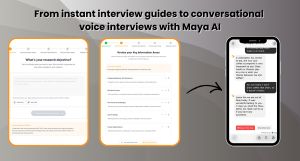
Merren’s Maya AI is built to conduct customer research via conversational, responsive interviews.
Mining the “silent” majority
Direct feedback has hit a historic low. In 2026, 30% of consumers will say nothing after a bad experience, they will simply churn. This “silent churn” is the silent killer of growth. CX professionals must stop relying on the vocal minority who fill out surveys and start analyzing the “digital body language” of the 97% who don’t (For every 10 poor experiences, 5 result in reduced spending, yet only 3 of those customers will tell you why).
Predictive vs. reactive listening
The most advanced CX teams are no longer waiting for a complaint. They are using predictive intelligence to spot frustration signals (read rage clicks or erratic navigation) to intervene before the customer even realizes they are unhappy. This shifts the paradigm from “damage control” to “preemptive care.”
CX Trend III: Trust is the new loyalty currency
We have reached an impasse in the data economy. Customers demand hyper-personalization but are increasingly hostile toward the data collection required to deliver it. This is the defining paradox of 2026.
The privacy-personalization paradox
While 64% of consumers prefer tailored experiences, only 39% trust companies to use their data responsibly. This stark disconnect suggests that while customers love the outcome of personalization, they resent the process. The brands that win in 2026 will be those that solve this equation.
Customers need to know the why behind your technology
Transparency is no longer a legal footer; it’s a product feature. Trends indicate that “showing your work” explicitly states, “We are using your location data to find stock near you” increases trust significantly. Customers are willing to share data, but only if they see a direct, immediate return on that investment in the form of convenience.
Design systems as trust builders
Brands might use design systems as a “secret weapon” for 2026. Consistency breeds trust. When a customer moves from your app to your website to your kiosk, a uniform interface will signal reliability. In 2026, inconsistent design will be interpreted as incompetence.
CX Trend IV: The employee experience (EX) revolution
In a counter-intuitive twist for the digital age, In 2026, the link between Employee Experience (EX) and Customer Experience (CX) is undeniable.
Tech that serves the employee
For too long, internal tools were an afterthought. In 2026, the “internal CX” will be determined by the quality of the software your agents use. Employees are revolting against “swivel chair” workflows where they must toggle between ten different apps to answer one question.
Breaking the burnout loop
Research shows that companies with high employee engagement outperform competitors by 147% in earnings per share. The trend for 2026 is to treat the employee as the “first customer.” If the employee struggles to get answers from their internal systems, the customer will inevitably struggle to get answers from the employee.
Empowerment over scripts
To handle the complex issues that AI can’t resolve, employees need agency. The trend is moving away from rigid scripts toward “guardrails” that allow agents to use their judgment. When AI handles the routine, the human agent’s role elevates to that of a problem-solver and empathetic listener, a role that requires autonomy, not a script.
CX Trend V: The loyalty equation (value vs. values)
While 46% of customers choose a business based on price/value, Experience (a combination of product quality and service) is what correlates most strongly with trust and the likelihood to repurchase.
The loyalty equation:
- The Trap of the Price War: Competing solely on price is a race to the bottom that erodes margins and service quality.
- The Emotional Moat: In 2026, “value” is being redefined. It’s not just the cheapest price; it’s the absence of hassle, the speed of resolution, and the feeling of being supported. A customer may come for the price, but they will leave due to the friction. Building an “ecosystem of moments” where you wow the customer at critical touchpoints is the only defense against cheaper competitors.
CX Trend VI: The offline revolution
In a counter-intuitive twist for the digital age, 2026 will see a resurgence of the physical. After years of digital-only acceleration, a significant segment of consumers are actively seeking offline escape.
Experts suggest that nearly one-third of consumers will prefer offline brand experiences over online ones. Furthermore, 52% of adults are actively pursuing tactile, in-person interactions.
The “Phygital” opportunity
This doesn’t mean digital is dead; it means digital must serve the physical. The winning strategy is “Phygital” using digital tools to enhance and not replace the physical moment.
Digital exhaustion & the human premium
Screen fatigue is real. CX strategies that force customers into apps for simple in-store tasks (like scanning a QR code to see a menu) are facing backlash. Brick-and-mortar locations are becoming “experience centers” rather than just transaction points. The role of the frontline employee is shifting from cashier to consultant. If a customer bothers to visit a store in 2026, they expect an experience that an app cannot replicate (sensory engagement and expert human advice).
Maya AI by Merren: Smart AI-Led Interview for Productive Research
Maya drives spontaneous research-driven, result-oriented interviews with real customers. As a result, you get conversations that can help you make business decisions for 2026.
Here is why Maya AI is meant to help you make research decisions in 2026
- Maya will make the discussion guide for you. You can assess the questions and customize them before moving to the next phase.
- Choose the interview persona, conversation languages and other filters you prefer and launch the interview.
- Each customer interview can be up to 2 to 3 minutes giving you in-depth insight on experiences.
- Access Maya’s analysis dashboard where you can view the transcripts and summarizes of each interview. Ask Maya to help you create a report of the entire interview.
Click here to see how Maya AI works for qualitative research
Conclusion: The Year of “Meaningful” CX
If 2025 was the year of “AI experimentation,” 2026 is the year of AI accountability and human restoration. The trends are clear: customers are tired of bad bots, invasive data practices, and screaming into the void of unanswered surveys.
For CX professionals and market researchers, the mandate is to stop counting scores and start solving problems. Whether it’s through mining the “silent” data of behavioral signals or empowering frontline employees to deliver genuine human empathy, the winners of 2026 will be the brands that use technology to make their customers feel more seen, not just more measured.