


The Net Promoter Score system is a customer satisfaction metric that was established by Bain & Company. The main aim is to predict company growth by earning the loyalty of your customers. Today industries with higher Net Promoter Scores are seen as industry leaders. In this blog, we will discuss what is the full form of tNPS and its formula. We will share the advantages, differences from relational NPS and how transactional NPS is used in customer experience (CX).
What is a Transactional NPS Survey?
Transactional NPS (tNPS) survey measures customer experience or sentiment immediately after a specific interaction or transaction with your business. Unlike the traditional (relational) NPS, which measures overall loyalty, tNPS drills down into the customer experience at each touchpoint to get actionable insights for rapid improvement. It is a straightforward 0–10 scale survey sent right after a customer engages with a service, a team or purchases a product/service from the brand.
tNPS core question:
Based on your recent interaction with our support team, how likely are you to recommend our business to a friend or colleague?.
- Promoters: Score 9–10: Likely to recommend, highly satisfied.
- Passives: Score 7–8: Satisfied but neutral.
- Detractors: Score 0–6: Unhappy, may spread negative word of mouth.
This feature is described further in the blog.
When to Use tNPS Survey: 9 High-Impact Touchpoints:
Send in-the-moment tNPS surveys for genuine and higher response rates.
- To assess post purchase experience from an ecommerce store.
- After a software bug fix or support ticket closure.
- To map customer satisfaction in the buyer journey .
- To assess customer satisfaction in an offline setup.
- To map a customer’s onboarding experience online.
- After an online or an offline product demo.
- To assess checkout or delivery experience.
- After a refund or return experience.
- After attending an offline event or a digital webinar.
What is the Difference Between Transactional NPS and Relational NPS?
Transactional NPS is a subset of Net Promoter Score. Transactional NPS will assess a transactional experience. Relational NPS will assess the overall satisfaction with the brand throughout a customer journey. Use both to get a full picture of your customer experience landscape.
Feature | Transactional NPS | Relational NPS |
Focus | Focuses at individual customer interaction (post purchase, support staff interaction) | Focuses on the overall customer satisfaction in the long term. |
Question timing | The focus is on the experience of a specific interaction | The focus is on how well a company is doing among competitors. |
Survey frequency | Can be frequent based on every customer-brand transaction. | Traditional NPS can be shared periodically or quarterly. It gauges overall company performance. |
Actionable insights | This helps brands focus on certain pain points or service issues. | NPS works on broader strategies such as loyalty programs or overall service improvement plans. |
What is a relational NPS (rNPS) survey?
Relational NPS (rNPS or simply NPS) measures brand advocacy based on the entire customer-brand relational in a customer journey. It assesses the sentiment of your customers towards your organization as a whole. Relational NPS captures the general perception of your brand, level of customer loyalty and learns about your brand advocates.
It is useful to track rNPS periodically, both quarterly and annually and compare against industry standard benchmarks.
The advantages of relational NPS (rNPS) survey
- Provides an overview of a customer’s relational with a business.
- Empowers customers to share feedback on products and services.
- Encourages passives (neutral) to share their experience as they are less likely to engage with traditional feedback forms.
- Helps businesses gather periodic user feedback to identify potential gaps in customer experience.
- Useful for industries with long customer journeys, such as the automobile, FMCG (household machines), and banking and finance sectors.
The disadvantages of relational NPS (rNPS) surveys
- Since rNPS focuses on general feedback, it cannot pinpoint specific interactions or issues within the customer journey.
- Overuse of rNPS surveys can lead to survey fatigue, prompting respondents to provide random or disengaged answers.
How to Calculate the Transactional NPS (tNPS) Formula?
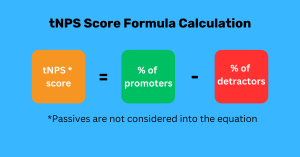
Transactional NPS, relational NPS and employee net promoter score are calculated with the same formula.
Percentage of promoters = (Number of Promoters / Total Number of Respondents) × 100
tNPS = % of promoters – % of detractors.
Scores can be between -100 to 100.
Example:
Out of 100 respondents, 50 customers are promoters and 30 customers are detractors. There are 20 passives in the equation. The calculation will be as follows:
Percentage of promoters = (50 / 100) × 100 = 50%
Percentage of detractors = (30 / 100) × 100 = 30%.
The final score = 50% – 30% is 20.

Three Types Of Customers in the Transactional NPS Survey
- tNPS Promoters (9 or 10): Promoters are brand loyal customers who recommend the product extensively among their peer groups.
- tNPS Passives (7 or 8): Passives are indifferent buyers who do not lean on either side of the scale.
- tNPS Detractors (6 or below): Detractors are unhappy customers who have a high potential of leaving or churning.
What is a good tNPS score?
A good Net Promoter Score depends on the industry and geographical location. Industry benchmarks vary. SaaS and ecommerce may average +30 to +60, while B2B services may score higher due to personalized interactions. However, Bain & Company has listed out general guidelines that we can note.
- 0 or below: This indicates that your customers are extremely unhappy. They might already have switched to the competitor product. At this stage, you might face loss of time, resources and risk your market reputation.
- 0 to 30: This indicates that the company is upgrading customer experience. There is a noticeable scope for improvement. This might be an acceptable score but brands still need to increase customer satisfaction.
- 30 to 50: This indicates that your customers are happy with your products and services. They are willing to recommend your brand. At this point, gather multiple positive customer testimonials.
- Above 50: This indicates that your brand has set the industry benchmark. A high score can be extremely challenging in a competitive market. Values of 60 and above are seen as excellent.
Close the Loop On tNPS Respondents: Score Based Actions
Based on a score value and feedback, here is what you can do to cater to your respondents
1. Plan of action for tNPS promoters:
Your tNPS promoters have already reached the top of the scoring scale. Your priority is to ensure they stay there.
- Launch referral programs to reward promoters for bringing in new customers. Turn recommendations into a monetizable asset.
- Offer cross-selling or upselling opportunities related to their previous purchases.
- Evaluate the effectiveness of your NPS strategy. For instance, if only 60% of customers follow through on recommendations, your NPS reliability may only be 60%.
- Engaged promoters provide higher quality feedback, allowing CX professionals to gather: in-depth customer insights, testimonials and independent reviews, participation in product testing campaigns.
2. Plan of action for tNPS detractors:
TNPS detractors can harm a brand reputation across offline and online touchpoints. This process is not guaranteed to create advocates. However, it can reduce dissatisfaction and yield neutral or passive scores in future surveys.
Develop a realistic action plan to close the feedback loop on detractors:
- Assess grievances with detractors.
- Segregate problems and implement feasible solutions.
- Close the feedback loop quickly to address concerns.
3. Plan of action for tNPS passives:
Passives can sway on the other side of the scale depending on their immediate experience with the brand This process is not guaranteed to create advocates. However, it can reduce dissatisfaction and yield neutral or passive scores in future surveys.
To encourage “customer delight”:
- Gather feedback from passives about improvement and need gaps. Give them the chance to be brand advocates.
- Implement solutions to address their concerns while adhering to company policies.
- Focus on preventing passives from turning into detractors by meeting their needs and expectations.
Where & When to Use Transactional NPS Surveys: 8 Examples
Transactional NPS (tNPS) surveys should be triggered immediately or within a few days after key customer interactions. Here are some important transactional situations where tNPS is important.
1. Product shipment confirmation:
Transactional Net Promoter Score survey is used to capture post-purchase experiences A tNPS survey can capture post-purchase experiences when customers receive a live tracking number. It helps identify technical issues, checkout friction points, or any other challenges during the purchasing process.
2. Support ticket call or interaction:
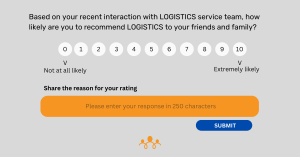
After resolving a customer’s support request, a tNPS survey can gauge satisfaction and highlight service gaps. A structured approach includes:
- Initial support call
- Feedback from a tNPS survey
- Follow-up call to ensure issue resolution
3. Product-usage information surveys:
Customer experience begins when the product is in use. A tNPS survey conducted a week or two after purchase helps assess if the product meets expectations and solves the intended problem.
4. New customer onboarding:
The new customer onboarding process can be overwhelming. A tNPS survey can uncover:
- Availability of sufficient resources
- Clarity of product details
- Smoothness of the checkout process
- Effectiveness of FAQs
5. In-store customer experience:
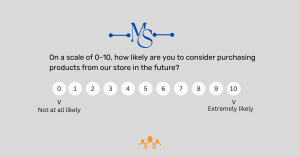
Even non-buyers influence brand perception. A quick tNPS survey for walk-in customers can measure whether they had a positive experience and would consider returning.

6. Application and website feedback:
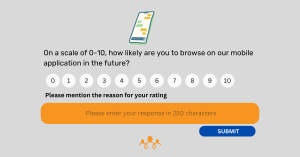
TNPS surveys help beta testers and users report bugs, glitches, and usability issues. Open-ended responses combined with NPS ratings enable developers to refine the app or website experience.
7. Follow-up satisfaction surveys:
Long-term satisfaction matters. A follow-up tNPS survey at key milestones helps track ongoing customer experiences—especially for high-value purchases like appliances or cars.
8. Free trial experience:
Potential customers assess product value through free trials. A tNPS survey during or after the trial helps determine:
- Likelihood of conversion
- Feature gaps
- Areas for improvement
How to Use Transactional Net Promoter Score Data in Business?
A transactional NPS score is more than just a feedback survey. It is an insight into various metrics that businesses might otherwise overlook. Here are the main reasons for using the tNPS survey:
1. Understand customer expectations to offer memorable CX:
Customer expectations are at an all time high. The NPS scores give marketers an insight on the current issues, usage problems, service issues. They can use this data to create a welcoming experience for every customer.
2. Detect customer churn probabilities among detractors:
The only way to amend problems is to first identify probabilities of churn rates. This can only be done via a tNPS survey. Detractors might churn sooner if unattended. Passives might convert to detractors during multiple unpleasant experiences. Customer experience teams can make early amends, intervene at the right time and convert them into happy customers.
3. Identify technical problem for transactions or usage:
Mobile applications and websites need constant improvements. A transactional NPS survey can capture details on bugs, technical problems and compatibility issues. Developers constantly need these responses to work on the user interface for a seamless browsing.
4. Monitor customer health scores and revenues:
Customers are a source of continuous revenue. It is important to monitor their satisfaction metrics at every touchpoint. The net promoter survey can detect detractors or passives immediately. This can give you insights on satisfaction levels, their experiences with your brand and monitor customer retention rates.
5. Support teams can act faster with in-moment responses:
A transactional NPS survey needs to be in-context with the event. This can bring real time responses for CX teams. It could be during a purchase process, post purchase experience or post service calls. In-the-moment customer feedback can help CX teams offer quick resolutions and improvements.
Tips to Design High-Response tNPS Surveys
Here are the best practices to follow when curating a transactional NPS score survey.
1. Ask context-based questions for clarity:
Keep questions specific to the interaction for quick recall.
A generic example: Based on the interaction, how likely are you to recommend us?.
To keep it clear and to the point, here is a better example: Based on your recent [interaction, e.g., support ticket #123], how likely are you to recommend us?
2. Include open ended question:
A tNPS survey can capture specific information but for clarity, seek open ended response. Allow people to explain the reason for the rating. You’ll learn about gaps and key points you may miss on a scale-based response.
3. Avoid color-coded scale:
Color coded scales (red, yellow, green) encourage bias in responses. Keep scale colour neutral and readable across screens so that customers can rate spontaneously.
4. Remove channel barriers
Friction points like multiple browsers can deter customers from answering a tNPS survey. Use interactive single-touch channels of WhatsApp, messenger, chatbots to get a high response rate. Merren brings native WhatsApp tNPS surveys that have an open rate of 98%.
5. Conduct active follow-ups
When you have promoters share their feedback, acknowledge it. This encourages them to offer periodic feedback. If customers are a passive or detractor, find ways to close the customer feedback loop in 24 hours. Personalize follow-ups and resolve conflicts.
6. Use structured triggers and automation
Building automatic survey triggers in your CRM ensures timely feedback. Trigger touchpoint-based transactional net promoter score surveys so that you can collect in-moment feedback.