
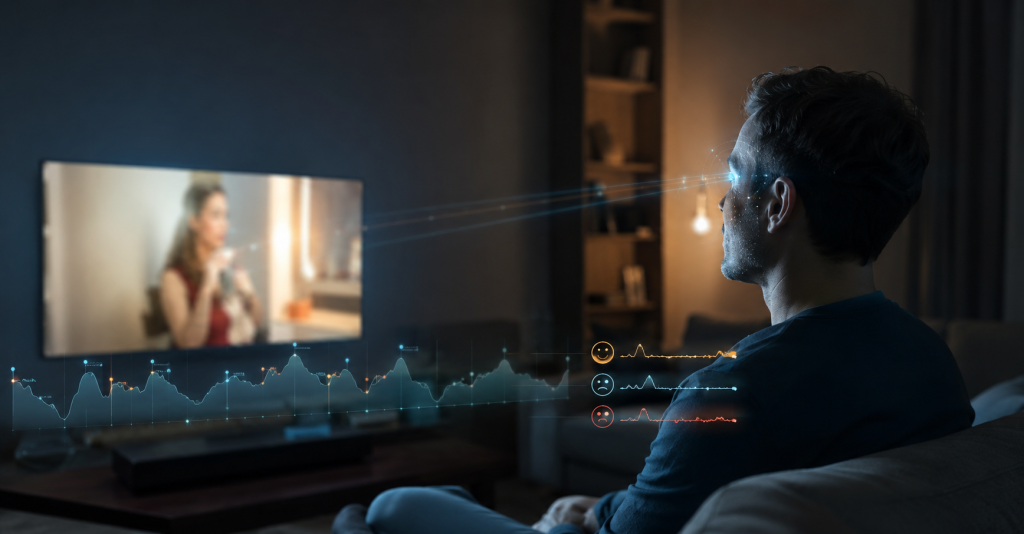
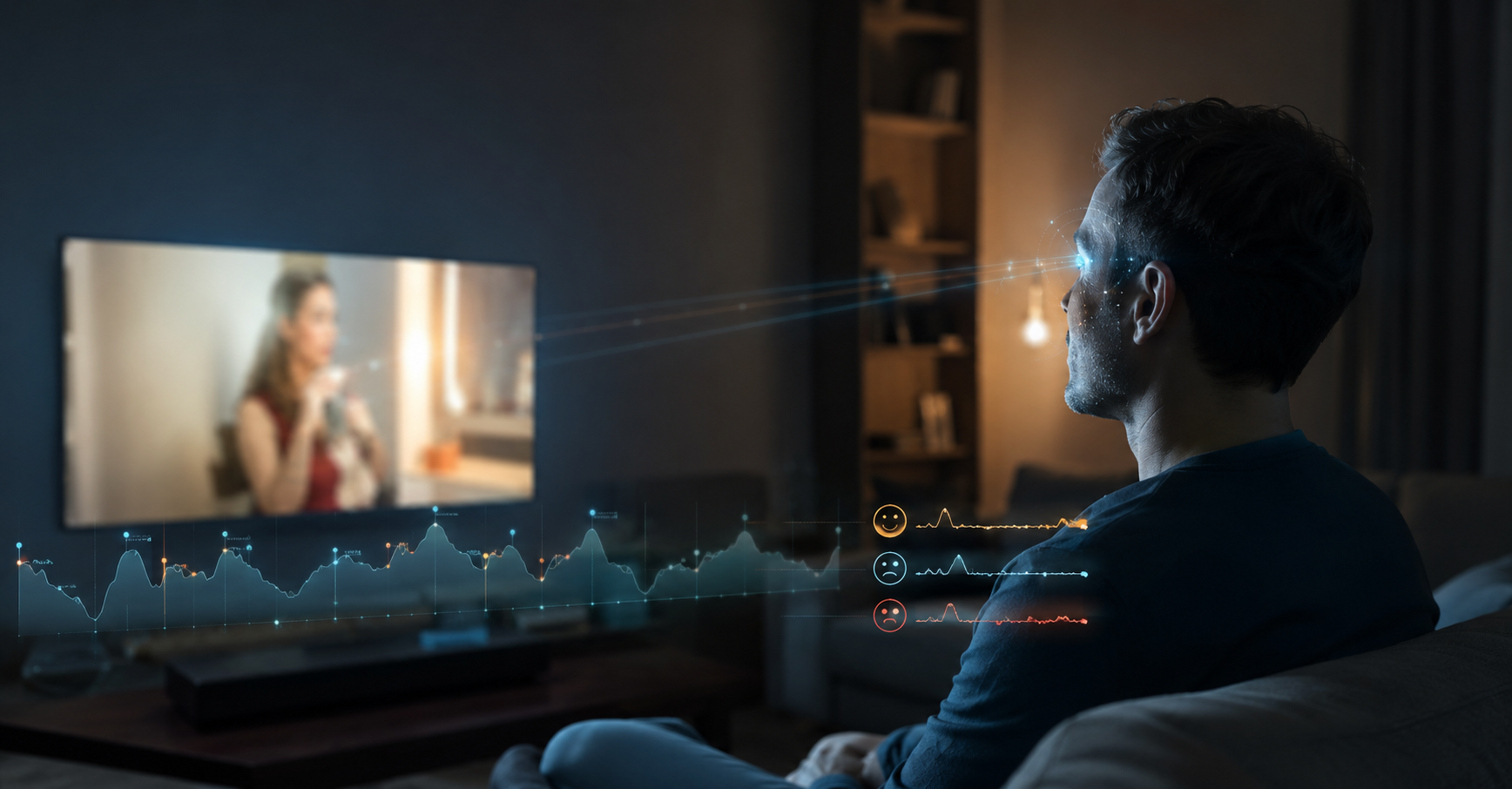
There is a scientific way to know if people will resonate with your ad. This means assessing their expressions, emotional metrics and reactions. This is where science and ad testing come hand in hand. MIRA by Merren solves a problem in marketing before spending large ad budgets. This blog outlines what MIRA can do.
Why Ad Testing Matters?
To understand why pre-testing an ad is worth the effort, you have to understand the economics of advertising. There are two fundamentally different costs involved in any campaign, and most people only think about the first one.
The first cost is production which is the cost of actually making the ad. You pay for a scriptwriter, actors, a director, a shoot, editing, and post-production. For a serious commercial, this might run somewhere in the range of fifty lakhs to a crore. It feels expensive and it is. It is not where the real money goes.
The second cost is media placement. What you pay every single time the ad runs on television, digital or any other channel. And this is where the numbers explode.
Advertising has an old rule of thumb: a person needs to see your ad roughly three times before they even remember your brand name. Take that with a pinch of salt, but it points at something real. Reach and frequency are the two levers of any media plan: how many people you reach, and how often you reach each of them.
The catch is that you cannot control exactly when someone is watching. To get one person to see your ad thrice, you might have to run it ten times, hoping to catch them around the shows they actually watch. That is just the bare minimum to register your brand name. Driving comprehension and action requires far more frequency on top of that.
Now put a price on it. A thirty-second slot during a marquee property ( think a high-demand sports coverage) can cost close to $16,000. Run it ten times in a single market and you have already spent over $100,000 just on repetition. Then multiply that across different markets, languages, and audiences since not everyone is watching the same channel. By the time a full media plan is built out, the total spend on a single campaign can land somewhere in the range of fifteen to twenty crore.
Here is the conclusion that changes everything:
Media placement is almost always far more expensive than the ad itself. If you suspect upfront that your ad won’t work, it is dramatically cheaper to spend another $100,000 making a better ad than to pour $200,000 of media money behind one that fails.
Traditional Ad Testing is Not Quick
Traditionally, ads are tested either before they air (pre-testing) or after (post-testing). The classic method looks like this: you recruit a group of respondents, bring them to a central location, show them the ad, and then ask them questions through a survey or an interview. Did you like it? Was it memorable? Did you understand it? What stood out?
It sounds reasonable. But there are two deep problems with this approach, and both of them undermine the very decisions the research is meant to support.
Problem one: everything is based on what people claim
When you ask a person what they thought of your ad, you are not getting a clean reading of their reaction. You are getting a socially filtered answer.
Respondents want to be agreeable. This politeness which respondents often believe is helping the researcher is exactly what fogs the data. The researcher walks away thinking “this ad is going to work,” when the warm response was just good manners.
It gets worse across cultures. Some cultures are far more comfortable being blunt than others. Ask the same question in a culture that prizes directness and you’ll get sharp, honest criticism. Ask it in a culture that prizes politeness and harmony, and almost everything comes back “good, very good.” This is human behaviour.
But it means that even your benchmarks don’t travel. A score that means “strong” in one region might mean “lukewarm but polite” in another. These differences aren’t just country-to-country but show up between a small town and a metro within the very same state.
So the first problem is fundamental: you can never be fully certain that what is claimed is actually true.
Problem two: surveys can only tell you about the ad as a whole
The second problem is about resolution. A traditional survey can tell you whether someone liked the ad overall. What it cannot tell you is what happened inside the ad.
If you ask a respondent, “Between the fifteenth and twenty-second second, did your attention drift?” they simply cannot answer. Nobody remembers their own engagement at that level of detail. So the question is never even asked. You’re left with a single blunt verdict on a thirty-second story that actually rises and falls moment by moment. The exact place where your ad is bleeding attention stays invisible.
MIRA by Merren: Replace Claims With Biology
This is the problem MIRA was built to solve. The name stands for Multi Input Response Agent for Ads, and the entire philosophy can be reduced to a single move:
Stop asking people what they think. Start measuring what their brains and faces actually do.
Instead of relying on claims, MIRA reads biology. It does this by fusing multiple independent signals into one second-by-second picture of how an ad performs before it ever goes on air. There are three layers to that picture.
Layer one: AI-predicted brain science
MIRA uses an open-source brain-mapping model that effectively mimics how a human brain reacts to content.
The underlying model was built on roughly a thousand hours of fMRI data. Recordings of real brains reacting to content producing something on the order of twenty thousand data points every second, mapping which regions of the brain light up in response to a given stimulus. MIRA takes that model and tunes it specifically for advertising.
The result is that MIRA can look at your ad video and predict, second by second, how a human brain would respond without needing a single live respondent for this layer. It maps reactions to meaning:
- When something memorable happens, does the memory-associated activity rise?
- When you mention a price or discount, does the decision-making, deal-seeking part of the brain engage?
- When your brand name appears, are the engagement and memory signals firing at that exact moment or is the brand landing on a flat patch where nobody is paying attention?
From this layer alone, MIRA produces a set of diagnostic scores, each rated 0–100:
Likability,
Message,
Comprehension,
Memorability,
Attention Grab,
Attention Hold
Brand Connection.
It even breaks the creative into its structural parts: the opening hook, the story build and the brand payoff and scores them separately, so you can see exactly which stretch of the ad is doing the work and which is dead weight.
Layer two: Assess reaction from gaze and face
The second input brings in real human beings. MIRA records actual participants as they watch the ad, capturing two distinct things at once.
The first is a gaze where the eyes are actually looking, moment to moment. Gaze tells you whether there was genuine attention and engagement, and exactly what on screen the viewer was looking at in any given second.
The second is facial expression, the emotion playing across the viewer’s face. This reveals whether they were delighted, engaged, admiring the craft of the ad, or whether the reaction was negative: bored, irritated, or disengaged.
By syncing the participant’s webcam feed frame-by-frame with the ad itself, MIRA lets you watch the face alongside the scene. Facial landmark tracking maps engagement, gaze, and smile detection in real time. Every second is tagged with what the participant was actually seeing. So a reaction is always matched to the exact moment that caused it.
Participant identities can also be fully anonymized while preserving the actual recorded expressions and gaze. The emotion data is real; the identity is protected.
Layer three: AI emotion analysis across seven emotions
The facial data feeds into MIRA’s emotion engine, where computer vision reads seven emotion families, each scored 0–100 with timestamped peaks:
- Delight — visible enjoyment (built from micro-emotions like amusement, joy, and satisfaction)
- Engagement — sustained attention
- Disengagement — the moment you start losing the viewer
- Friction — the message isn’t landing
- Aesthetic — admiration of the craft
- Negative Reaction — active dislike
- Surprise — an unexpected moment
MIRA also detects brand moments automatically: whether the brand appears on screen or someone says the brand name aloud. That means you can measure the precise emotional state of the viewer at the exact instant your brand shows up. If your brand lands during a trough of disengagement, you have a problem that no overall “likability” score would ever have revealed.
How A MIRA Test Runs
Putting it together, a MIRA test follows a clean sequence:
- Upload your ad. You securely upload your unreleased commercial for the sample participants. Importantly, you don’t test it in isolation. In the real world, nobody watches a single ad; they watch a cluttered break with five or six ads in a row. So MIRA places your ad inside a reel of other randomly selected ads, somewhere in the middle, to replicate how it would actually be encountered.
- Brain Response runs. The fMRI-trained AI model predicts neural activation across every second, no respondents needed for this layer.
- The audience watches. Target participants view the reel via a secure link. Their webcams capture faces and gaze in real time. The sample might be anywhere from a few hundred to fifteen hundred participants, depending on the study.
- Signals are fused. Brain Response, Visual Engagement, and Facial Reaction are merged into a single per-second readout, a composite MIRA score that’s also available as its own individual layers.
- The readout is delivered. You get a full creative diagnosis: timestamped scores, diagnostics, and specific, implementable creative actions.
How MIRA Analyses Output
MIRA gives an engagement curve, the fused composite score plotted second by second, with peaks, troughs, and brand moments flagged directly on the timeline. You can see exactly where the ad grabs people, exactly where it loses them, and exactly what emotional state surrounding your brand reveals.
MIRA turns that data into plain-language creative diagnostics. Every report delivers a set of scored questions, each with a readout grounded in the signal data and a specific action. For example:
- Brand Connection — 27, Weak. Readout: brand visible in only 7% of frames, and not on peak moments. The fix writes itself: move the brand to where the attention actually is.
- Attention Hold — 41, Weak. Readout: engagement falls to zero very early. You’re losing viewers before the story even begins.
- Likability — 62, Strong. Readout: delight peaks mid-ad; the ad reads as likeable.
- Message Comprehension — 77, Excellent. Readout: friction is low; the narrative flows cleanly from setup to build to climax to resolution.
- Memorability — 80, Excellent. Readout: delight peaks align with brand visibility.
Each readout is tied to evidence. Each action is concrete enough to implement. This is the difference between “people seemed to like it” and “your brand is landing in a dead zone at frame 7 — move it.”
Now, instead of asking respondents a single biased question, you’ve shown them a realistic break with your ad embedded inside it and measured with biology. You can take that data and decide, with real confidence, whether this is the ad worth putting media dollars behind.
Where MIRA fits in the bigger picture
MIRA is a focused tool for content and ad pre-testing and sits inside a broader vision. The flagship engine is Maya, the AI-moderated interview system that handles the why behind the numbers.
Maya conducts one-on-one AI-moderated depth interviews. It probes the emotional and rational reasons behind each reaction: why engagement dropped at a specific second, whether a brand moment felt forced or earned, and what the audience itself would change.
The clean division of labour:
MIRA measures biology. Maya uncovers the meaning and confirms it at scale. Together they give you a complete picture of why your ad works.
Conclusion
Ad pre-testing has always been caught between two bad options: trust what people claim (and risk being misled by politeness), or fly blind and let the media spend decide your fate. MIRA offers a third path. By reading AI-predicted brain response, real gaze and facial emotion, it tells you not just whether your ad works, but where it works, where it breaks, and what to do about it all before media dollars get committed.
In an industry where the ad costs a fraction of the airtime behind it, knowing the answer in advance isn’t a luxury. It’s the smartest crore you’ll ever spend.
Know before you go on air. Request a MIRA pilot on your next TVC →